Physiological Recovery Protocol
Athletic Recovery: Sleep Architecture, Nervous System Tone & Deloading

Updated September 2026 · 8 min read · Evidence-based
A foundational truth in athletic performance is that training does not build strength; training breaks the body down. The gym session is merely the mechanical and metabolic stimulus. The actual synthesis of new muscle proteins, the mineralization of bone matrices, and the remodeling of damaged tendons occur exclusively during the recovery window.
Without structured physiological recovery, progressive overload becomes a fast track to overtraining syndrome, endocrine suppression, chronic tendinopathy, and stalled progress.
1. Sleep Architecture: The Ultimate Anabolic State
Human growth hormone (hGH) is secreted predominantly in pulsatile bursts during Slow-Wave Sleep (NREM Stage 3/4). Shortchanging your sleep from 8 hours down to 5 or 6 hours results in a catastrophic endocrine cascade:
- Serum Testosterone Depletion: Multiple clinical studies reveal that restricting sleep to 5 hours nightly for just one week reduces circulating testosterone levels in healthy young men by 10% to 15%.
- Blunted Muscle Protein Synthesis: Sleep loss elevates systemic myostatin (the genetic inhibitor of muscle growth) while reducing the phosphorylation of key signaling pathways (Akt/mTOR).
- Impaired Glycogen Resynthesis: Sleep deprivation triggers insulin resistance in skeletal muscle cells, impairing carbohydrate replenishment after workouts.
The 5 Golden Rules of Athletic Sleep Hygiene
- Circadian Anchoring: Wake up at the exact same time 7 days per week and expose your eyes to natural sunlight within 30 minutes of rising.
- Thermal Regulation: Keep your sleeping room cool (between 18°C and 20°C / 65°F–68°F). The human body must drop its core temperature by ~1°C to initiate deep sleep.
- Caffeine Curfew: The quarter-life of caffeine is approximately 10 to 12 hours. Cease caffeine intake by 12:00 PM to ensure zero adenosine receptor blockage at bedtime.
- Blue Light Attenuation: Turn off bright overhead LED lighting 90 minutes before sleep. Blue wavelengths suppress melatonin production from the pineal gland.
- Nasal Breathing: Ensure unobstructed nasal respiration during sleep to prevent nighttime hypoxia and sleep fragmentation.
2. Autonomic Nervous System: Sympathetic vs. Parasympathetic
High-intensity resistance training and sprint intervals heavily activate the sympathetic nervous system (fight-or-flight), flooding the bloodstream with epinephrine and cortisol. If your body remains chronically sympathetic due to life stress, poor nutrition, and lack of down-regulation, tissue remodeling halts.
Rapidly shifting into the parasympathetic nervous system (rest-and-digest) post-workout accelerates recovery. We prescribe 8 to 10 minutes of box breathing (4-second inhale, 4-second hold, 4-second exhale, 4-second hold) immediately following every training session.
3. Passive vs. Active Recovery
Lying on the sofa completely stationary following a brutal leg session allows metabolic byproducts to pool in tissues. Contrast this with Active Recovery:
| Modality | Mechanism | Recommended Prescription |
|---|---|---|
| Low-Intensity Incline Walk | Activates calf muscle pump, increases venous return without muscle damage | 30–40 minutes at conversational pace (under 120 bpm) |
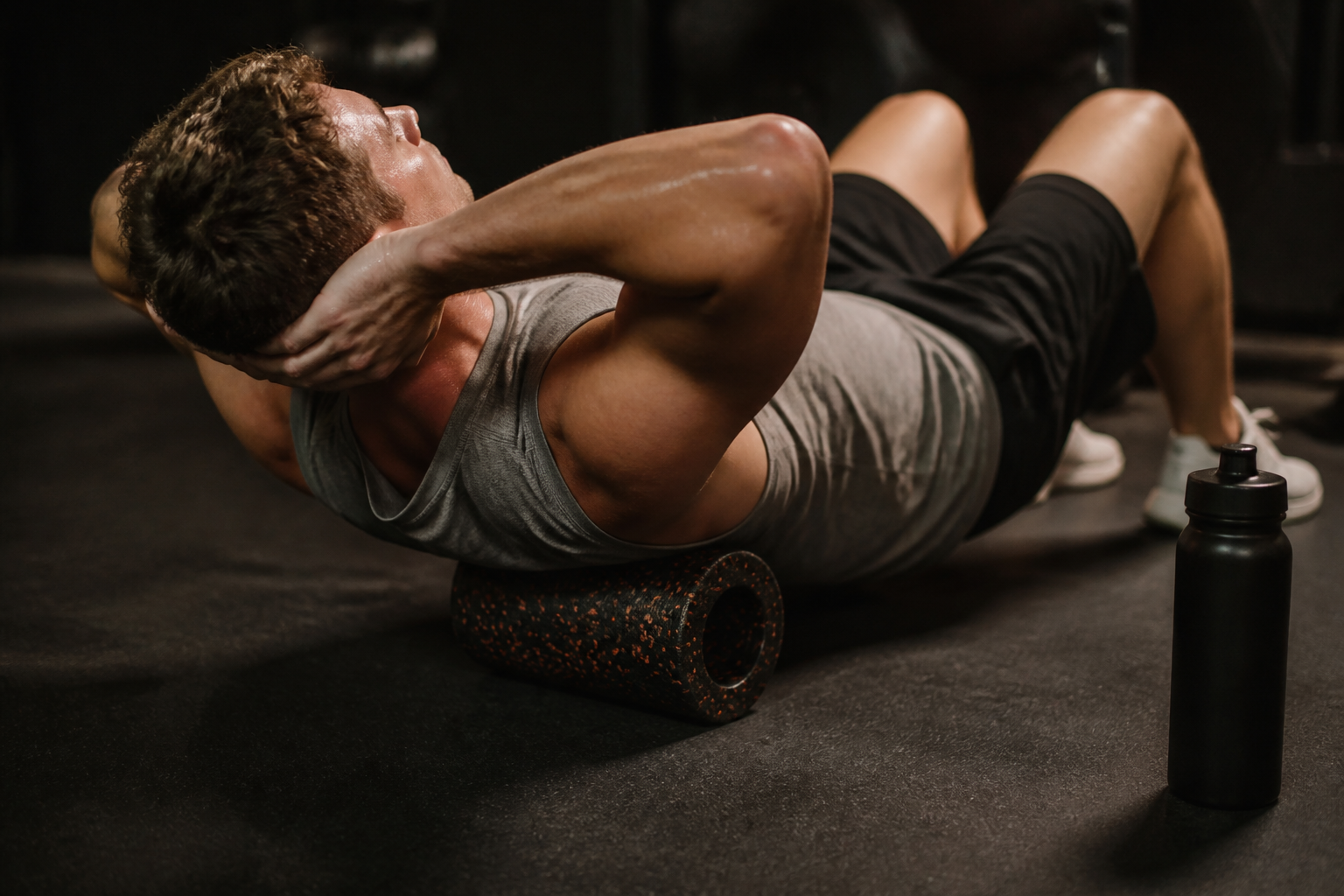
| Foam Rolling & Myofascial Release | Reduces arterial stiffness, improves tissue hydration and neural tone | 60–90 seconds per major muscle group (quads, lats, glutes) |
| Contrast Water Therapy | Alternates vasodilation and vasoconstriction, reducing perceived soreness | 3 rounds of 3 min hot shower / 1 min cold water |
4. The Deload Week Periodization
Tendons and ligaments have significantly lower blood flow than muscle tissue; while muscles may feel fully recovered after 48 hours, connective tissues accumulate microscopic micro-tears over successive weeks of heavy lifting.
Every 4 to 8 weeks, program a mandatory Deload Week:
- Maintain your normal weights on the bar (keeps neuromuscular familiarity)
- Cut total working sets by 40% to 50% (e.g., if you normally do 4 sets, do only 2 sets)
- Leave 3 to 4 reps in reserve (RIR) on all exercises
Recovery Disclaimer: Overtraining and chronic fatigue can mimic symptoms of clinical depression, iron-deficiency anemia, or endocrine dysfunction. If you experience persistent chronic exhaustion, insomnia, or elevated resting heart rate, consult a licensed physician for complete bloodwork.